
The Best Time to Visit Phuket Depends on Your Priorities
Ask five travellers for the best time to visit Phuket and you may hear five sensible answers. A family building the week around beach days, a group that wants long private dinners and a team planning a quiet extended stay do not need identical conditions. The useful question is not simply which month is driest; it is which season gives your group the best chance of enjoying its most important plans.
Phuket is warm year-round, but its weather has a recognisable rhythm. November to February is generally the drier, cooler-feeling period. March and April tend to feel hotter, while May to October is influenced by the southwest monsoon and usually brings more rain and changeable conditions on the Andaman coast. Transition dates vary, and no month comes with a guarantee of sunshine, rain or a particular sea state.
Begin with a short priority list. Rank beach swimming, boat trips, outdoor celebrations, privacy, unhurried villa time and flexible dates. Then decide which items would disappoint the group if weather changed them. This turns seasonality from a vague worry into a practical booking decision. It also makes conversations with accommodation and activity providers much more specific.
November to February: The Straightforward Outdoor Choice
For many first-time visitors, the drier period from roughly November through February is the easiest answer. Outdoor meals, beach visits and days on the water are more likely to fit the familiar picture of a Phuket holiday. That does not make every day cloudless or every crossing smooth, but it reduces the amount of flexibility most groups need to build into the programme.
This period particularly suits a short stay with several fixed outdoor ambitions. If the group wants a private charter, a beach afternoon and an open-air dinner within four or five days, more settled seasonal conditions improve the odds of following the original plan. Each operator should still make the final safety decision using the current forecast, local warnings and conditions on the chosen route.
Popular travel dates also reward early organisation. Confirm the exact villa sleeping plan, restaurant tables, vehicles and any private experiences together rather than treating accommodation as the only scarce item. For a six-bedroom property, collect guest names and room preferences before sending the enquiry. That small piece of preparation can prevent a beautiful week from beginning with avoidable room negotiations.
March and April: Hotter Days and a Slower Rhythm
March and April can work well for travellers who enjoy heat and are willing to design the day around it. Instead of planning continuous sightseeing, put the most active outing earlier, protect the middle of the day and return outdoors when the light softens. A private villa becomes especially useful when the group can swim, rest, work or eat without another transfer.
Heat affects people differently. Children, older relatives and guests arriving from cooler climates may need more shade, water and recovery time than the most energetic member of the party. Make optional activities genuinely optional, and avoid measuring the value of the holiday by how many places the group visits. One well-timed excursion followed by a private afternoon can feel far more generous than an overfilled schedule.
If a celebration or professional gathering is planned during these months, discuss guest arrival, shade, food service and the timing of formal moments with the organiser. Sunset may be visually appealing, but the whole event plan must work before and after it. Weather-aware scheduling is not about removing spontaneity; it creates the conditions in which guests can actually enjoy the setting.
May to October: Plan for the Southwest Monsoon, Not Constant Rain
The wetter part of the year is often described too simply. The southwest monsoon can bring showers, heavier rain, wind and rougher seas to Phuket's Andaman coast, yet that does not mean every day is lost. Conditions can change within a day and vary across the island. A successful stay in this period depends less on predicting each hour and more on keeping the itinerary adaptable.
Avoid making a boat day the single irreplaceable purpose of the trip. Keep more than one possible date, use a reputable operator and accept that the captain may alter or cancel a route when conditions require it. The Thai Meteorological Department publishes Phuket and Southern West Coast forecasts, including rain, wind and wave information; check the latest official update and follow operator guidance rather than relying on an old monthly average.
A weather-resilient villa day needs very little drama. A long breakfast, the cinema, games, a massage or a private meal can occupy the wettest hours, while brighter intervals remain available for the pool and terraces. The aim is not to pretend rain is part of every dream holiday. It is to choose a property and a programme that still feel worthwhile when an outdoor plan moves.
Match the Season to Families, Groups and Special Plans
Families should begin with school dates and the children's tolerance for heat, travel and disrupted plans. A short school-holiday visit may justify prioritising the drier months, while a longer stay gives the family more chances to move beach or boat days around the forecast. Whichever period you choose, build in unscheduled time; tired children rarely care that an excursion was highly ranked.
Large groups need a clear decision-maker. Weather changes become difficult when twelve people are consulting different apps and suppliers. Agree who receives official updates, who can approve a revised itinerary and how the rest of the group will be informed. If a private dinner moves indoors or vehicles leave later, one coordinated message is far calmer than a group-wide debate.
Weddings, retreats and productions require a more formal alternative plan. Identify covered or indoor spaces, trigger times, supplier responsibilities and any equipment that needs weather protection. A villa holiday can stay loose, but an event schedule should state exactly who makes the call. Seasonal averages help select a period; a written operational plan protects the day itself.
Choose a Villa That Works in More Than One Kind of Weather
The most useful seasonal question to ask a villa is simple: what will everyone do if the original plan changes? Look for more than a photogenic pool. Covered dining, comfortable indoor rooms, entertainment, reliable connectivity and enough private space allow several generations or friendship groups to follow different rhythms without leaving the property.
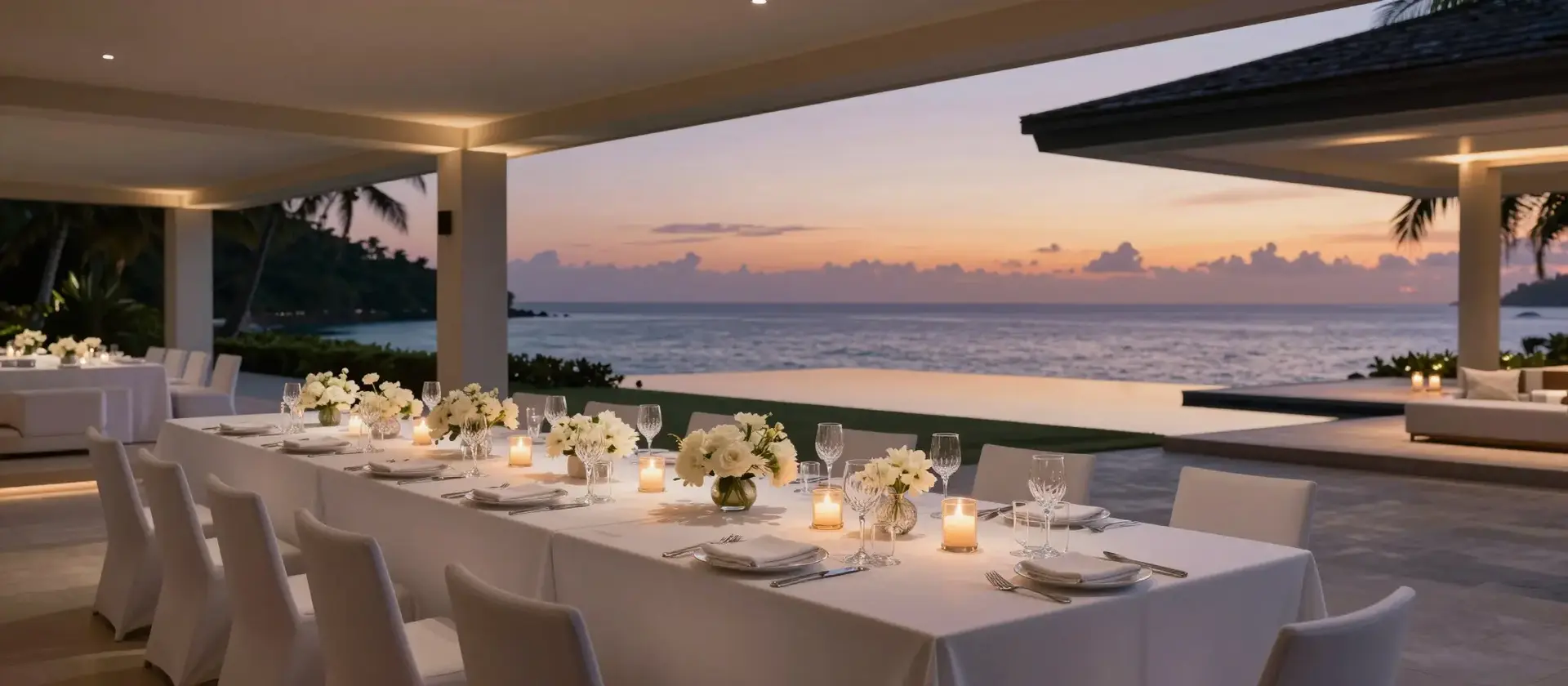
Kiri Anda occupies an elevated seafront setting approximately six metres above the shore, with uninterrupted sea views. It is not directly on a sandy beach, so swimming beach visits remain separate outings in every season. The villa has six double bedrooms and eight bathrooms, with existing beds for 12 adults. Up to two children under 12 may share existing bedding with their parents in each bedroom, and up to three optional single extra beds can be arranged at THB 2,000 per bed.
There is no universally perfect month for Phuket. Choose November to February when outdoor reliability carries the most weight, consider March and April if your group handles heat well, and approach May to October with a flexible plan and current official forecasts. Once the dates are shortlisted, send Kiri Anda the guest mix, length of stay and must-do experiences so the team can confirm the accommodation plan and help shape a realistic proposal.