
Define the Outcome Before Choosing the Venue
A successful corporate retreat in Phuket begins with a sharper question than “where should we stay?” Decide what needs to be different when the team leaves. A leadership group may need confidential decisions and uninterrupted working time; a department may need stronger relationships; an incentive trip may be primarily a reward. Those goals lead to different agendas, room plans and venue requirements.
Write a one-page brief before requesting proposals. Include the purpose, dates, number of overnight guests, any additional daytime participants, working hours, preferred meal style, essential technology and the experiences the group would genuinely enjoy. Separate fixed requirements from attractive extras. A spectacular pool will not rescue a retreat that lacks a workable room allocation or a quiet place for the most important conversation.
A private villa suits teams that value exclusive use and a less institutional rhythm. Work, meals and informal conversations can happen within one property, and the agenda does not have to follow hotel meeting-room slots. That flexibility is useful only when responsibilities are clear, so appoint one organiser who can approve the programme, consolidate questions and make decisions for the group.
Map Bedrooms, Bathrooms and Working Zones
Start with a named rooming list rather than a headline capacity. Kiri Anda has six double bedrooms and eight bathrooms, with existing beds for 12 adults. Up to two children under 12 may share the existing bedding with their parents in each bedroom. Up to three optional single extra beds can be arranged at THB 2,000 per bed. For a company offsite, confirm whether colleagues are comfortable sharing double rooms or whether some people need separate accommodation nearby.
Room allocation can affect the tone of a retreat more than organisers expect. Consider seniority, accessibility, sleep schedules and privacy, then communicate the plan before travel. If partners or families are joining, keep the professional guest list and family arrangements distinct. A clear plan avoids awkward negotiations at check-in and shows whether one estate can house the full team comfortably.
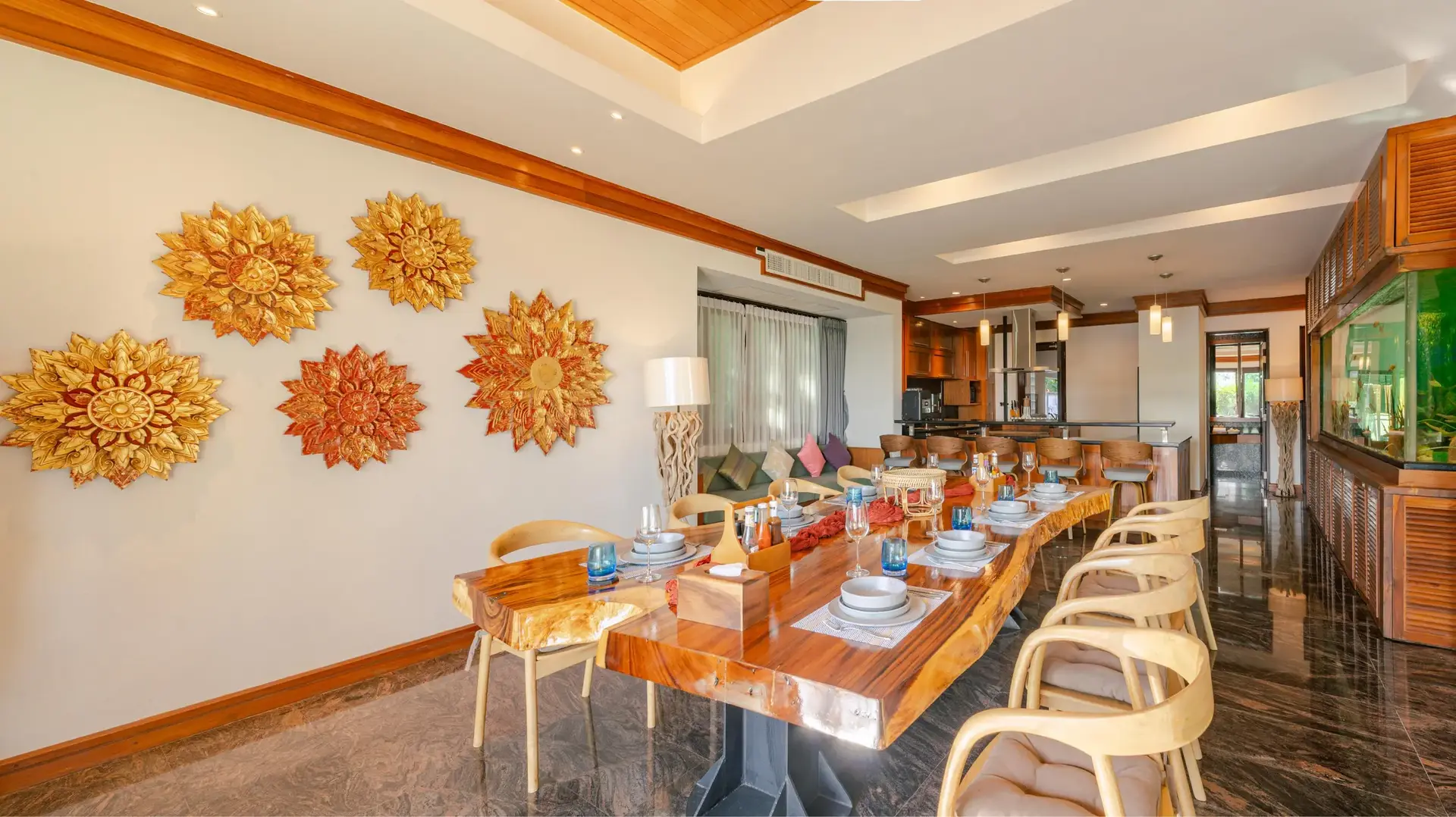
Next, assign a purpose to each shared space. One area might hold full-group sessions, another smaller discussions, and a quieter room confidential calls or individual work. At Kiri Anda, the communal dining table, living areas, terraces, gardens, cinema and entertainment spaces create several possible settings. Ask how furniture may be arranged and what equipment is permitted instead of assuming a leisure room already functions as a conference room.
Design a Programme With Breathing Room
A retreat is not improved by filling every hour. Travel, tropical weather, meals and informal conversations all take longer than they do on an office calendar. Protect the sessions that must produce an outcome, then leave buffers around them. A strong day may include one substantial working block, a shared meal, a lighter discussion and an optional activity rather than a chain of presentations from breakfast to dinner.
Use the change of setting deliberately. A planning session can move into a relaxed lunch, while an afternoon by the pool or on the floodlit sand court gives people a natural way to reconnect. A cinema night, private dinner or time on the sea may suit another group. Treat every excursion as a choice with transport, weather and recovery time attached, and confirm availability before printing the final programme.
Build an indoor alternative for any essential outdoor session. The aim is not to predict conditions perfectly but to protect the retreat's purpose if the original plan changes. Tell facilitators which spaces are available, agree who decides when to move indoors, and keep at least one unscheduled period. People often need that space to process a difficult discussion or continue a useful one.
Verify Privacy, Technology and Group Logistics
For leadership meetings, product discussions or sensitive personnel matters, privacy should be tested rather than implied. Ask whether the estate is exclusive to one booking, which staff or suppliers will enter, how visitors are approved and where conversations may be overheard. Kiri Anda is a standalone private estate with a three-metre perimeter wall, controlled access, outdoor CCTV and an alarm system. The organiser should still set the team's own rules for documents, photography and guests.
Connectivity needs a similarly practical conversation. Kiri Anda has high-speed Wi-Fi and three-phase electricity, but organisers should describe their actual load: video calls, simultaneous devices, presentation equipment, microphones, lighting or any specialist production. Request a test for business-critical systems and decide whether the team needs backup connectivity. Never assume that a television, cinema screen or household socket automatically supports a particular meeting setup.
Transport should be planned from the guest list outward. Collect arrival details, luggage requirements and mobility needs, then decide which vehicles remain at the estate and which only drop off. Kiri Anda has parking for up to eight cars inside, with possible overflow arrangements that must be confirmed. Give drivers one arrival contact and keep emergency access clear rather than allowing each guest to improvise independently.
Make Meals and Downtime Part of the Retreat
Meals are not a gap between agenda items; they are often where colleagues compare notes and relationships become easier. Decide which meals need the whole group together, which should stay flexible and whether dietary requirements require separate preparation. Ask how service, clearing and kitchen access will work so a long lunch does not collide with the next session.
Private dining can be especially useful after a confidential or demanding working day because the team does not need another transfer or a public restaurant table. The same privacy can become isolating if every meal remains on site, so balance estate time with selected outings that match the group's energy. Rawai and South Phuket can support coastal dining, wellness time and days on the water, but the organiser should confirm every supplier and arrangement rather than presenting suggestions as guaranteed inclusions.
Downtime also needs permission. Some guests will want the pool, three jacuzzis, games or the 140-inch cinema; others may need a quiet hour alone. Make optional activities genuinely optional and avoid turning relaxation into another performance metric. The best retreat rhythm lets people participate fully without requiring them to socialise continuously.
Request One Decision-Ready Proposal
Ask shortlisted venues to respond to the same brief. The written proposal should identify the exact accommodation plan, exclusive-use areas, session spaces, included services, meals, transfers, suppliers, equipment, payment schedule and any event-specific conditions. It should also state what remains subject to confirmation. Comparing the same fields is far more useful than comparing packages with different assumptions hidden inside them.
For Kiri Anda, describe the setting accurately to stakeholders: it is an elevated seafront estate approximately six metres above the shore with uninterrupted sea views. It is not directly on a sandy beach. The distinction matters when planning activities, footwear, photography or guest expectations, and it is better to solve it in the brief than explain it on arrival.
A private villa should make a retreat more focused, comfortable and human—not simply more photogenic. When the objective is clear, every guest has a sensible sleeping plan, important systems are verified and the agenda leaves room for real conversation, Phuket becomes part of the work rather than a distraction from it. Send Kiri Anda your dates, group structure and intended outcome to begin a tailored retreat proposal.