
Plan for People, Not Simply Generations
A Phuket family villa holiday can bring grandparents, adult children, teenagers and younger children under one roof, but age labels do not explain how people actually travel. One grandparent may be the first into the pool. One teenager may need quiet time. A toddler may wake before sunrise while another adult works late across time zones. Good planning begins with habits and needs rather than assumptions about generations.
Make a simple guest map before choosing rooms or activities. Note couples, children sharing with parents, light sleepers, early risers, mobility considerations, dietary requirements and anyone who needs private work or rest. Ask each household for its essentials, then let one organiser combine the answers. A family group chat with fifteen competing preferences is not a planning system.
Agree what the trip is meant to achieve. A reunion may centre on shared meals, while a milestone birthday may need one carefully organised celebration. If the purpose is simply time together, protect that from an itinerary filled with compulsory outings. The villa should make gathering easy without making every hour communal.
Create the Bedroom Plan Before Booking
The phrase family villa can hide an awkward sleeping arrangement. Ask for the permanent bed in every enclosed bedroom, the number and location of bathrooms, the policy for children sharing, and the exact number of optional beds. Then assign named guests to rooms before paying a deposit. A headline capacity is useful only when everyone knows where they will sleep.
Kiri Anda has six double bedrooms and eight bathrooms, with existing beds for 12 adults. Up to two children under 12 may share existing bedding with their parents in each bedroom. Up to three optional single extra beds can be arranged at THB 2,000 per bed, per night. These options provide flexibility, but they do not turn every room into the right room for every family.
Put the practical questions ahead of status. Consider bathroom access, stairs, distance between parents and children, noise from shared areas and how early sleepers will be protected. If two households both expect the same bedroom, resolve it before arrival. Nothing punctures the generosity of a family holiday faster than a room negotiation in the entrance hall.
Treat the Private Pool as a Shared Responsibility
A private pool is one of the pleasures of villa living because the family can swim without following a resort timetable. It also requires a clear supervision plan. Adults should decide who is actively watching younger or less confident swimmers, when the pool is in use and how responsibility is handed over. Being somewhere near the water is not the same as supervising it.
Ask the property to explain the pool layout, depths, access points, lighting and any rules that affect children. Bring or arrange correctly sized flotation and safety equipment appropriate to the family's needs, while recognising that equipment does not replace supervision. The same care applies to jacuzzis, wet terraces and games that become more energetic as the day continues.
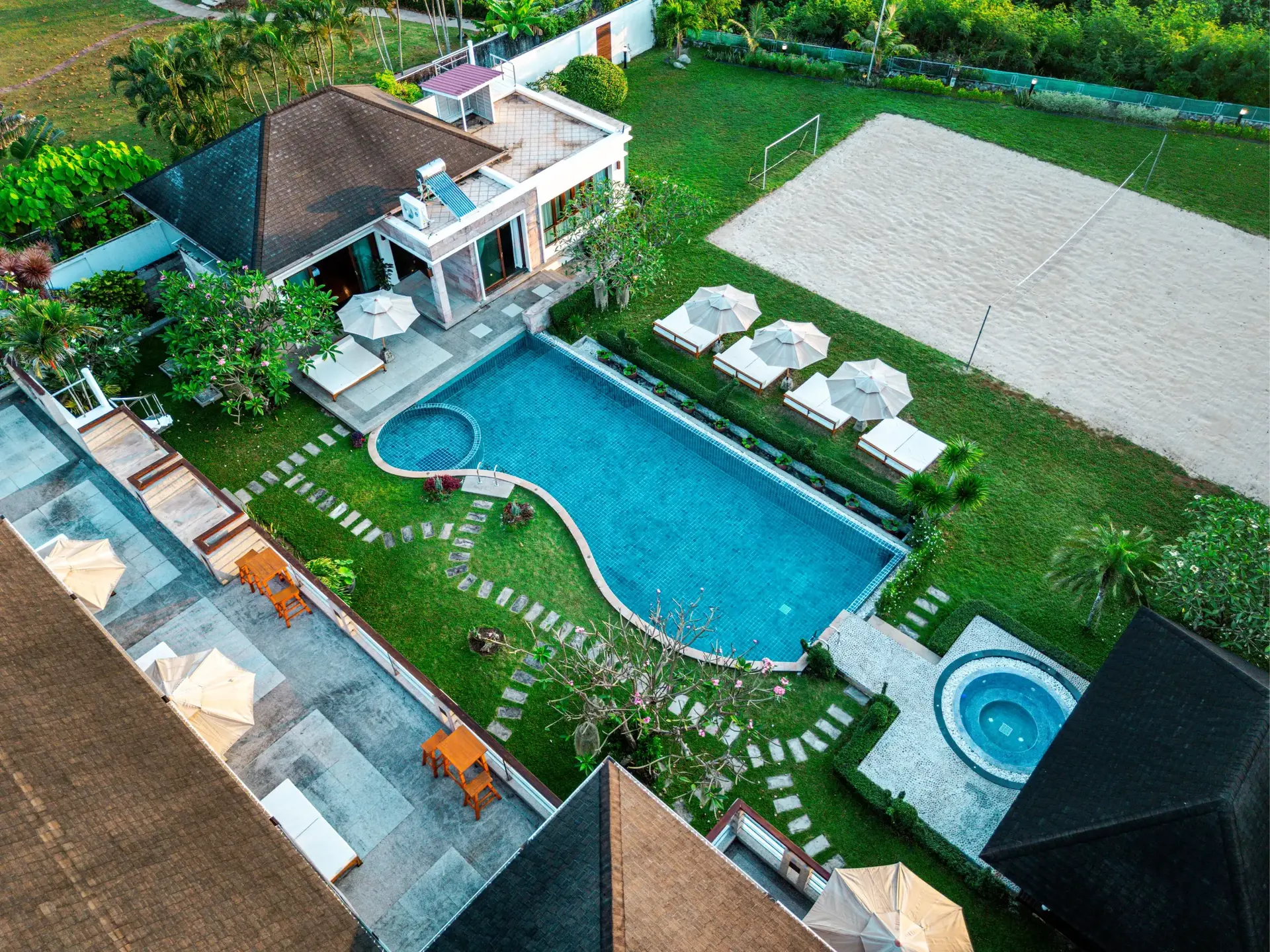
Kiri Anda's pool, three jacuzzis, cinema, games areas, gardens and sand sports court give a family several ways to spend time at the estate. Divide activities by interest rather than insisting on one programme. Some guests can watch a film while others swim, read or play outside, then everyone can meet again for dinner.
Design Meals Around the Family's Real Rhythm
Food becomes complicated when several households travel together. Younger children may eat early, older relatives may prefer familiar dishes, and adults may want one long evening meal without turning every dinner into an event. Collect allergies, dietary requirements and strong preferences in writing, then decide which meals genuinely need the whole family at one table.
A useful rhythm might combine simple breakfasts, flexible lunches, one or two restaurant outings and selected private dinners. Confirm any catering or chef arrangements in the proposal rather than assuming a fully staffed kitchen. Ask about menu choices, serving times, drinks, children's portions and cleanup so the organiser is not quietly managing the household throughout the holiday.
Leave room for smaller groups to eat separately. Teenagers may want a casual meal; parents with young children may prefer an early dinner; other adults may go out later. Shared accommodation should create choices, not reproduce the pressure of a formal family occasion three times a day.
Use Two-Speed Days Instead of One Long Itinerary
Multi-generational holidays work well when the day can move at two speeds. One part of the family might take a longer excursion while another chooses a beach visit, a quiet morning or time at the villa. Build a few anchor moments—perhaps breakfast, an afternoon gathering or dinner—then allow smaller groups to form around them.
For every outing, check journey time, vehicle capacity, shade, walking, toilets, meal timing and how easily someone can return early. Do not describe an activity as suitable for the whole family until the operator has heard the actual ages and mobility needs. Weather-dependent plans should have a second date and a comfortable alternative rather than becoming a test of everyone's patience.
Appoint one transport coordinator and share the day's plan the evening before. The message should include departure time, expected return, what to bring and who is going. This sounds almost comically organised until three vehicles leave at different times with the wrong bags, one child and nobody's restaurant reservation.
Choose Honest Space and Leave Some Time Unplanned
The best family property is not necessarily the one with the longest amenity list. It is the one that explains its layout, occupancy, services and setting clearly enough for the family to picture an ordinary day. Ask which areas are exclusive, how staff access works, what must be arranged separately and where guests can withdraw without leaving the estate.
Kiri Anda occupies an elevated seafront setting approximately six metres above the shore, with uninterrupted sea views. It is not directly on a sandy beach, so beach swimming remains a separate outing rather than something children can reach from the garden. That distinction should be understood before booking because an honest setting is more valuable than a description built around the wrong expectation.
A successful family villa holiday does not require perfect agreement. It needs a clear room plan, active pool supervision, meals that respect different routines and enough freedom for people to separate without causing offence. Send Kiri Anda your dates, full guest mix, children's ages and essential requirements when enquiring so the accommodation plan can be confirmed before the family begins arranging the rest of the trip.