
Define What Private Means for Your Group
Private villa privacy in Phuket is often presented as a feeling: a quiet pool, a high wall and nobody else in the photograph. Before booking, turn that feeling into a list of conditions. Does one reservation have exclusive use of the entire property? Are any entrances, gardens, pools or entertainment areas shared? Can neighbouring buildings see the terraces or bedrooms? The word private should answer practical questions, not replace them.
Different groups also need different kinds of privacy. A family may care most about a pool that is not shared with strangers. A wedding party may need controlled supplier access. A leadership team may want confidential conversations, while a public figure or production crew may be concerned about overlooking properties and unapproved photography. Decide which moments must remain private, then ask the villa to explain how the property supports them.
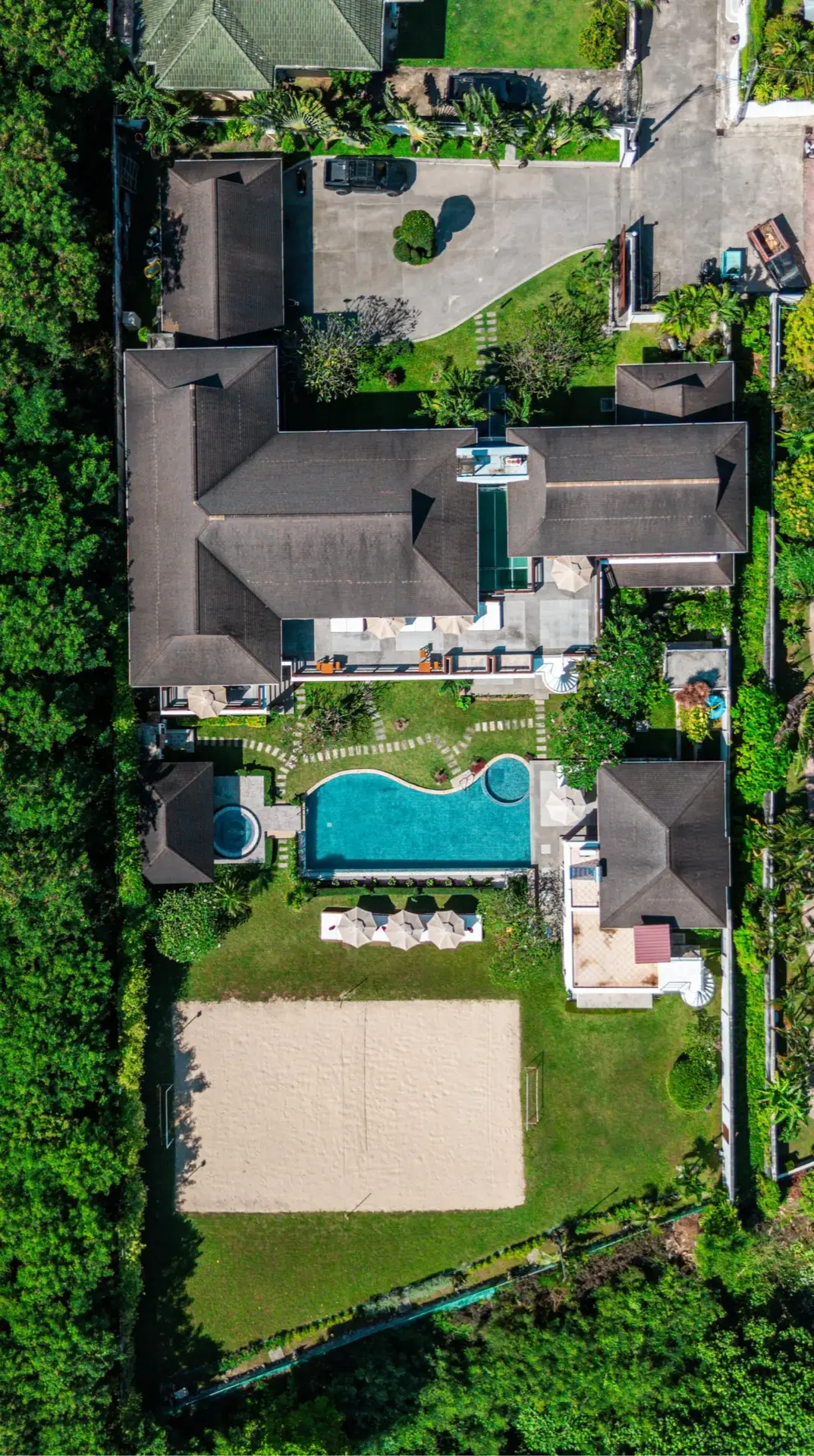
Request a current site plan, recent photographs or a video walkthrough when the layout is difficult to understand online. Ask the property to distinguish spaces included in the booking from staff-only, service or neighbouring areas. A good answer should be specific enough for the organiser to describe an ordinary day at the villa without filling the gaps with assumptions.
Map Everyone Who May Enter During the Stay
Exclusive use does not mean the gates will never open. Housekeeping, garden and pool care, maintenance, catering, drivers and other approved suppliers may need access. Ask who normally enters, how often, during which hours and whether the lead guest is told before anyone arrives. Privacy usually works best when necessary service is predictable rather than invisible or improvised.
If the group wants minimal interruption, agree the service rhythm before arrival. Some guests prefer daily attention; others would rather combine tasks into a shorter scheduled window. Confirm how keys, gate access and deliveries are handled, and name one organiser who can approve changes. That protects the group without making every routine visit feel like an incident.
Events, retreats and productions need a formal access list. Separate overnight guests, daytime participants, crew, vendors and drivers, then confirm which categories are permitted under the booking. Accommodation permission should never be treated as automatic approval for an event, commercial shoot or additional visitors. Written access arrangements make arrival calmer for guests, staff and suppliers alike.
Test Sightlines, Boundaries and Sound
A wall or gate can control entry without preventing a view from a nearby road, hillside or upper floor. Study aerial images and photographs taken from the pool, terraces and bedrooms. Ask what lies beyond each boundary and whether neighbouring properties overlook the main outdoor spaces. The aim is not to demand complete isolation; it is to understand where the group will feel visible.
Sound travels differently from sight. Music, celebrations and lively pool time may carry beyond the estate even when nobody can see inside. Ask about quiet hours, outdoor-speaker rules and any restrictions that affect the planned stay. A secluded appearance is not permission to ignore neighbours, and a private event still needs an operating plan that respects the surrounding area.
Kiri Anda is a standalone estate with a three-metre perimeter wall, controlled access, outdoor CCTV and an alarm system. Its elevated seafront position sits approximately six metres above the shore and provides uninterrupted sea views. It is not directly on a sandy beach, so the seafront setting should not be confused with public beach access through the grounds.
Ask What the Security Features Actually Do
Security language can become vague quickly. A gated entrance, alarm, camera system and staffed security presence are different arrangements. Ask which features operate at the property, where they are located, who monitors or responds to them and how guests contact assistance. Do not assume that the phrase secure estate means a staffed reception or guard at every hour.
CCTV deserves a clear explanation. Confirm that cameras cover exterior or access areas rather than private interior spaces, and ask the property to identify their general locations. The organiser should also tell guests what to expect. Cameras can support access management, but they should not be presented as a substitute for sensible key control, agreed visitor procedures and attentive adults around children or the pool.
Plan for the ordinary problems as well as dramatic ones. Ask how guests secure doors and valuables, what happens if a key or access device is lost, and who can assist with a maintenance or medical issue. Save the property contact, local emergency information and full address in more than one phone. A useful security plan is easy to understand at two in the afternoon and two in the morning.
Include Digital and In-Group Privacy
Privacy does not stop at the boundary wall. Groups may bring work calls, shared documents, streaming accounts and many personal devices into the villa. Ask for the Wi-Fi arrangements and whether a business-critical group should organise backup connectivity. Avoid using shared screens without signing out afterwards, and keep confidential calls away from communal rooms and service routes.
The group also needs its own photography rules. Decide whether guests may post the location in real time, photograph children, share event images or include staff and suppliers in social content. Retreat and production organisers should make consent explicit rather than assuming everyone is comfortable because the booking is private. A beautiful setting can encourage constant photography; it does not remove anyone's right to decline it.
Room allocation affects privacy inside the group. Kiri Anda has six double bedrooms and eight bathrooms, with existing beds for 12 adults. Up to two children under 12 may share existing bedding with their parents in each bedroom, and up to three optional single extra beds can be arranged at THB 2,000 per bed, per night. Confirm named guests and sleeping arrangements before booking so privacy is not negotiated after arrival.
Put the Privacy Plan Into the Proposal
Before paying, ask for one written proposal that records exclusive-use areas, the guest list, approved visitors, planned staff access, service hours, any event or production permission and the main security arrangements. It should also identify the arrival contact and explain how urgent assistance is requested. This need not become an intimidating document; clarity is the point.
Compare properties using the same questions. A villa with a long list of security equipment may offer less practical privacy than a well-managed property with clear boundaries and predictable access. Conversely, a remote setting is not automatically secure or convenient. The best choice is the one whose layout and operating routines match the group's real concerns without making claims the property cannot support.
A genuinely private villa stay feels relaxed because the important details have already been agreed. Define privacy for the people travelling, test the physical layout, understand who will enter and document the plan. When enquiring about Kiri Anda, share your dates, complete guest mix and any privacy, staffing, event or production requirements so the team can confirm the appropriate arrangements before the stay.